

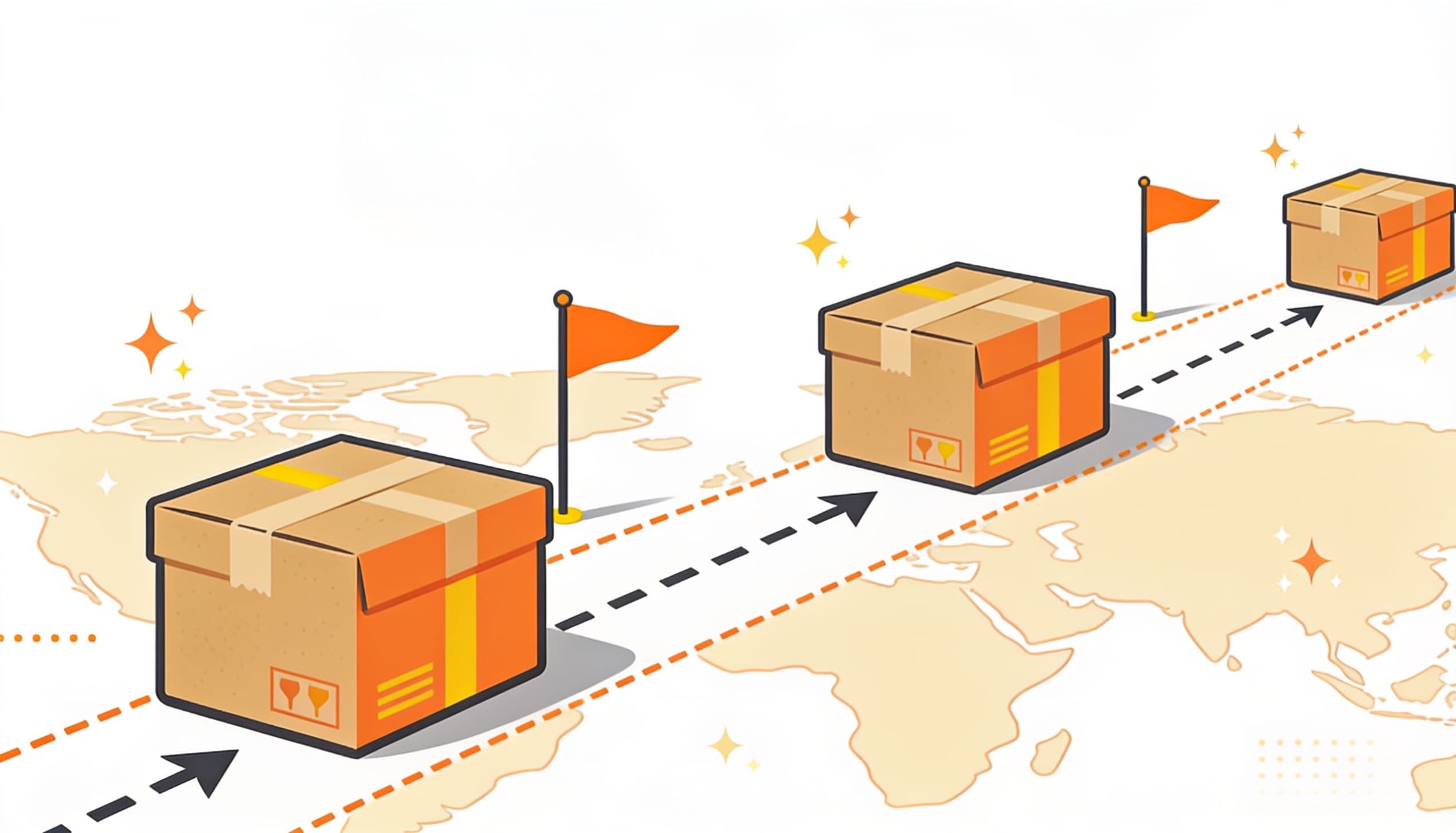
You have built a solid position on Amazon.it: sales are stable, your ranking holds, margins are healthy. At some point growth slows down, not because the product stopped working, but because the Italian market is a fraction of European demand. Expansion is the natural next step. The point is doing it at the right time and in the right order: brands that spread too early or on too many fronts multiply their problems, not their revenue.
Before opening a new marketplace, answer two questions: is the Italian business solid enough to support the expansion? And which market deserves to be first?
The signs you are ready to expand
- Your product has proven demand on Amazon.it, with solid reviews and stable rankings on your main keywords
- Margins hold up even after adding the logistics, tax and advertising costs of new markets
- Operations are not already stretched: restocks on time, inventory under control, no recurring crises
- You have budget to fund an advertising launch in a market where nobody knows you
If one of these conditions is missing, expansion will make it worse. An inventory problem in one country becomes a problem in four, and campaigns that waste budget in Italy will burn more where clicks cost more.
Which markets to open first
Germany is Europe's largest marketplace and for many brands the natural first stop. It is also the most competitive one, with customers who expect precise technical detail and review harshly. France and Spain are smaller, but in many categories they offer less competitive pressure and cheaper advertising. The overall size of a market matters less than the demand for your category: before deciding, measure search volumes, average prices and local competitors country by country, the way we do in our research and strategy projects. The practical rule: one market at a time, two at most. The next ones open with what you learned from the first.
The logistics leap: when to move stock closer to customers
You can start selling abroad with the stock you already hold in Italy: Amazon ships across the border order by order and you open no new VAT registrations. It is the right setup for testing, but it comes at a cost: higher fulfillment fees and slower deliveries, which depress conversion. Once a market shows consistent volumes, moving stock into local warehouses with the Pan-European program changes the game: Prime delivery in 24-48 hours, lower domestic fees, rankings that benefit. In exchange you take on VAT obligations in the storage countries. Make the switch when fee savings and sales growth comfortably cover the fixed tax costs, not before.
Localizing listings that already work
Compared to someone starting from scratch you have a huge advantage: you already know which arguments convert, which images work, which objections block the purchase. What you cannot do is translate. Every market searches for the same product with different words, and Amazon rewards whoever captures the exact terms: start again from local keyword research and rewrite titles and bullet points around the country's search intent, not around Italian syntax.
Read the reviews and customer questions on local competitor products: they tell you what the audience expects and which doubts to address in your content. German customers want precise technical specs; in other markets brand storytelling carries more weight. A+ content needs adapting too, not just translating.
Advertising does not survive copy-paste
Campaigns that run well in Italy often fail abroad, for predictable reasons. On the new marketplace you start with no history: the algorithm does not yet know who to show your ads to, and the learning phase must be budgeted for. Costs per click change, in Germany they are usually higher than in Italy, and keyword competition is different. Rebuild your campaigns around the local keywords that emerged from listing localization and set a target ACOS for each market, because margins shift with fees and taxes. And as soon as your brand gets noticed, defend your branded keywords: local competitors will find you sooner than you think. This is the work we handle in multi-marketplace advertising projects.
Reviews: you start from zero
On a new marketplace your brand has no track record. Italian reviews do not follow you, and shoppers distrust products with no social proof. The Vine program is the official way to earn your first reviews: reviewers selected by Amazon try the product and leave an independent opinion. Stay strictly within policy: any shortcut on reviews puts the entire account at risk, including the Italian one. Also plan customer support in the market's language: fast, clear answers turn into better ratings.
The typical mistakes of expanding sellers
- Opening four or five marketplaces at once and managing none of them well
- Activating Pan-EU before validating demand, paying VAT and local advisors on minimal volumes
- Machine-translating listings and blaming the market for the drop in conversion
- Duplicating Italian campaigns and letting ACOS spiral
- Overlooking EPR duties and local rules on packaging and products
European expansion is the most accessible multiplier for a brand that has already proven itself on Amazon.it. Treat it as a project, with priorities, budgets and checkpoints, not as a box to tick in Seller Central. If you want to understand which markets hold the most potential for your catalog and in what order to open them, let's talk: we build tailored expansion plans, from demand data to local campaigns.